
Three data points (extracts from Wikipedia, corroborated by multiple research sources)
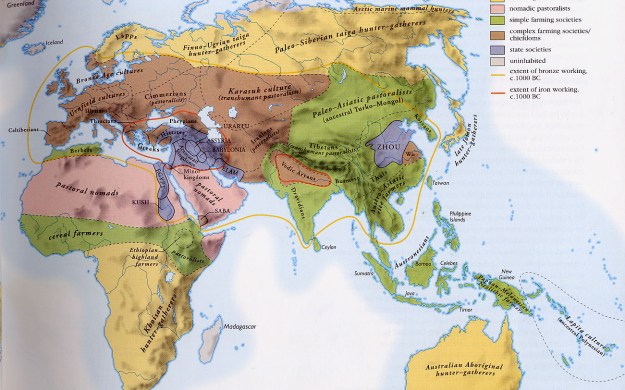
- Between 1200 BC and 1000 BC, diffusion in the understanding of iron metallurgy and utilization of iron objects was fast and far-flung.
- Some cultural evidence (the presence of sati in the Mahabharata but not in the main body of the Ramayana) suggests that the Ramayana predates the Mahabharata. The general cultural background of the Ramayana is of the post-urbanization period of the eastern part of North India, usually dated between 1200 BC – 800 BC.
- Those who believe that the stories of the Trojan War are derived from a specific historical conflict usually date it to the 12th or 11th centuries BC, often preferring the dates given by Eratosthenes, 1194–1184 BC, which roughly corresponds with archaeological evidence of a catastrophic burning of Troy.
Helen, wife of Greek king Agamemnon’s brother runs away with / gets abducted by the prince from Troy. It results in a grand invasion – the one that launched a thousand ships – and the complete destruction of Troy. Notable among the Greek warriors was Achilles. It wasn’t his wife that got abducted, but he was in the thick of battle, always.
Compare this with the Ramayan. Sita, wife of Ram, prince of Ayodhya gets abducted by King Raavan of Lanka. He sets out to rescue her, collecting an army along the way. A grand invasion and war later, Lanka is destroyed and Raavan killed. Notable among the Indian warriors was Hanuman. It wasn’t his wife that got abducted, but he was in the thick of battle, always.
The Indian story flips the Greek version on its head. Good become evil, greys become black and white, human beings become divinity – and the story itself is part of our religious literature. Lord Ram is Vishnu Incarnate who came down to Earth to rid it of the evil Demon King Raavan. The similarities are striking. Which one happened first? If the legend of Ram has to be placed in recorded history, it would be around 1000 BC. The Battle of Troy is around the same time.
That the ancient world was connected, that ideas and inventions were diffused globally via the merchant trade routes, and the occasional invasion or alliance by marriage is now common fact.
This period of history, between 1500 BC – 500 BC, the start of the Iron Age, saw explosive growth in civilisation and progress. With the taming of iron – forests were cleared, agriculture industrialized, roads built, weapons forged, wars waged (iron does that, it makes things easier to do) – and alongside, art, culture and religion, introspection if you will, blossomed. This age of human kind was more porous and connected than any time before it – and it resulted in diffusion of human thought at an incredibly global scale. As these ideas spread, they were adopted by individual cultures and adapted to suit their local audiences. The most fascinating roots, origins, connections and parallels are there to be found, if you choose to look!
 SAMEER NAIR
Yes it’s all about looking !
anu